
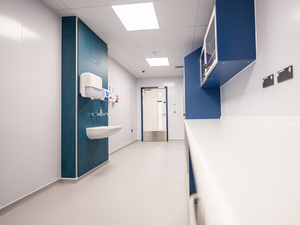
Why infection prevention matters in healthcare.
Infection prevention and control (IPC) is fundamental to creating safe healthcare environments for patients, staff and visitors. Hospitals and other clinical settings experience a constant flow of people, equipment and materials, making effective cleaning, maintenance and infection prevention measures essential.While hand hygiene, cleaning protocols and appropriate clinical practices remain central to reducing the spread of infection, the design and specification of the built environment also play an important role.
Healthcare doors are among the most frequently touched and heavily used elements of a clinical building. From ward entrances and treatment rooms to corridors and clinical support areas, doorsets must withstand repeated use and regular cleaning without compromising their surface integrity.
Choosing the right doorset for each application can therefore support effective IPC, helping healthcare facilities maintain cleanable, durable and fit-for-purpose environments.
The role of doorsets in infection prevention.
Doors and their associated components are exposed to frequent contact throughout the day. Handles, push plates, door edges and surrounding surfaces may be touched by patients, staff and visitors, making appropriate cleaning and maintenance essential.
In busy clinical environments, doorsets must also withstand repeated impacts from beds, trolleys and other equipment. Over time, this combination of physical wear and regular exposure to cleaning products can damage unsuitable surfaces. Cracks, chips, peeling finishes and damaged edges can make surfaces more difficult to clean effectively. They may also create areas where dirt and organic material can accumulate, undermining cleaning procedures.
When specifying healthcare doorsets, it is therefore important to consider more than appearance and initial cost. Surface durability, cleanability, chemical resistance, construction and maintenance requirements should all form part of the decision-making process.
Choosing the right doorset for the environment.
Not every healthcare space has the same requirements. A doorset in a busy hospital corridor will face different demands from one in a treatment room, clean area or clinical support space.
The specification should reflect the intended use of each location, considering factors such as:
- Cleanability: Surfaces should be accessible for routine cleaning, with details that minimise difficult-to-clean gaps and joints.
- Impact resistance: Doorsets should withstand the expected frequency and severity of impacts from beds, trolleys and other equipment.
- Chemical resistance: Finishes must be compatible with the cleaning and disinfecting products used by the healthcare facility.
- Surface integrity: Materials and construction should help maintain a durable, cleanable surface throughout the doorset's service life.
- Maintenance: Damaged finishes and components should be identified promptly, with appropriate repairs or replacement carried out when necessary.
Getting these details right helps support cleaning regimes while reducing avoidable maintenance and disruption to clinical services.
Managing timber and laminate doorsets.
Timber and laminate doorsets can be suitable for certain healthcare applications, depending on their construction, finish and intended use. However, their performance in demanding clinical environments depends on how well they withstand repeated impacts, cleaning and general wear.
In high-traffic areas, impacts from beds and trolleys can chip, crack or damage door faces and edges. Depending on the construction, damage may expose underlying materials or compromise the finish, making the affected area more difficult to clean effectively. Cleaning chemicals can also affect some coatings and finishes if they are not compatible with the products being used or are applied outside the manufacturer's recommendations.
This does not mean that all timber or laminate doorsets are unsuitable for healthcare. Rather, their suitability should be assessed against the demands of the intended location, the expected maintenance regime and the required service life.
The benefits of post-formed PVC doorsets.
Post-formed PVC doorsets offer an alternative for healthcare environments where durability, cleanability and resistance to everyday wear are important considerations.
By forming the PVC finish around the door edges, post-formed construction can reduce the number of exposed edges, joints and transitions associated with some conventional door constructions. This can simplify cleaning and help protect the underlying door material from damage, subject to the specific doorset design.
Key considerations include:
-
Durable, cleanable surfaces
A robust surface can help a doorset withstand repeated impacts associated with busy clinical environments. Maintaining the integrity of the finish is important because damaged surfaces can become more difficult to clean effectively. -
Resistance to routine cleaning
Healthcare doorsets must tolerate the cleaning products and methods used within the facility. PVC finishes can offer good resistance to many commonly used cleaning agents, but compatibility should always be confirmed against the manufacturer's guidance and the healthcare provider's cleaning protocols. -
Reduced exposed edges and joints
Post-formed construction can minimise exposed timber edges and certain joints where dirt and debris may accumulate. The overall cleanability of the doorset will still depend on its design, hardware, seals and installation details. -
Long-term performance
In areas subject to frequent impacts, a durable doorset may help reduce damage, repairs and premature replacement. This can support continuity of service and reduce the disruption associated with maintenance work in operational healthcare facilities.
Why doorset maintenance matters.
Even a well-specified doorset requires appropriate inspection and maintenance throughout its service life.
Regular checks can help identify damaged surfaces, deteriorating edges, loose or damaged hardware and other defects that may affect cleanability or performance. Where damage is found, the appropriate response will depend on its nature, severity and the manufacturer's recommendations.
Cleaning procedures should also reflect the materials and finishes installed. Using compatible products and following the manufacturer's instructions can help preserve surface integrity and avoid unnecessary deterioration.
A proactive maintenance approach supports IPC by helping ensure that doorset surfaces remain suitable for routine cleaning and that any defects are addressed promptly.
Supporting infection prevention through better specification.
The specification of healthcare doorsets is one part of a wider approach to infection prevention and control. Effective IPC depends on a combination of appropriate design, cleaning procedures, maintenance and clinical practice.
For architects, contractors and NHS estates teams, the challenge is to select doorsets that meet the needs of each clinical space without overlooking durability, cleanability or long-term performance.
A doorset that is appropriate for its location can help support effective cleaning, withstand the demands of daily hospital use and reduce avoidable maintenance. Considering these factors early in the design and specification process can also help limit the risk of unsuitable products being selected for demanding environments.
At SDS, we believe in specifying the right door, for the right location, for the right application. By considering the intended use, performance requirements and maintenance demands of each space, project teams can make informed decisions that support safer, more resilient healthcare environments.
